The internal problem is the specific negative emotion or psychological frustration a customer feels due to an external barrier. While customers search for solutions to external problems (like landscaping ideas or lead generation strategies), they ultimately purchase products to resolve the internal problem (feeling overwhelmed or stuck). Effective marketing must identify and validate this emotion to trigger a conversion.
Most businesses are excellent at describing what they do. They list features, specs, and deliverables with pinpoint accuracy.
But features, specs, and deliverables aren't enough to motivate someone to purchase from you. You likely aren't missing a feature; you might just be missing a feeling.
In our experience at Mammoth, we've found that while people have external problems that need solving, the thing that actually motivates a purchase is the internal problem. It's how that external problem makes them feel.
This isn't just marketing theory; it's biology. According to Harvard Business School professor Gerald Zaltman, 95% of purchasing decisions occur in the subconscious mind. Your customer 'feels' the decision before their logical brain even gets a chance to review the spec sheet.
If you can articulate that internal struggle better than your customer can, they won't just trust you. They'll view you as the right solution.
External vs internal problems
To fix your messaging, you first need to distinguish between the first two layers of problems your customer faces. (And for our StoryBrand fans, you'll know there's also a third level, the philosophical problem).
- The external problem is the tangible, physical issue. It's the thing getting in the way.
- Example: "I need a website update."
- The internal problem is the emotion attached to that issue. It's the frustration, fear, or insecurity caused by the external problem.
- Example: "I feel embarrassed to send investors to my current URL."
The framework is simple. Companies tend to sell solutions to external problems, but customers buy solutions to internal problems.
A note for B2B businesses: You might think this only applies to consumer brands like Nike or Coke. But a study by Google and CEB found that B2B buyers are actually more emotionally connected to their vendors than consumers are. Why? Because the stakes are higher. If you buy a bad pair of shoes, you're annoyed. If you buy bad software for your company, you could lose your job.
We’ve seen it first hand
We don't just teach this. We live it. On our Mammoth website, we know that our clients struggle with marketing that gets ignored. So how would that make someone feel?
Well, they'd feel stuck. They know what their business is capable of, but they don't know how to reach it on their own.
So we made sure that the word "stuck" is used throughout the copy on our website. And over the years, we've got the feedback from prospects on sales calls that specifically mentioned that feeling stuck resonated with them.
"You perfectly nailed it. I am stuck. I read that on your website, and that was a key motivator for me booking this call."
While other factors were involved, validating their internal frustration was a hook that grabbed their attention.
Real-world examples
Here's how this looks in practice for two of our clients.
Client A: Groundcover Landscaping
- The external problem: The client’s outdoor area is overgrown or underutilised.
- The internal problem: They feel disappointed. They feel they can't host friends or make the most of their property.
- The shift: Marketing that speaks to resolving that disappointment converts better than marketing that just talks about retaining walls.
Client B: Paysquad (FinTech)
- The external problem: Buying group gifts or splitting payments online is hard. One person needs to front the cost of the entire purchase.
- The internal problem: They feel awkward. The organiser feels the burden of chasing friends for money.
- The shift: The messaging isn't just about the mechanics of splitting payments. It's about removing the friction from friendship.
How to uncover your customer's internal problem
You can’t guess this. If you sit in a boardroom and guess how your customers feel, you'll likely project your own biases.
The best way to identify the internal problem is to interview your customers directly.
During your onboarding calls or sales meetings, try using these questions to drill down to the core emotion:
- Establish the dream: "Tell us, where would you love your business (or life) to be in 12 months' time?"
- Identify the barrier: "So, what's getting in the way of you achieving that?"
- Reveal the emotion: "And how does that make you feel?"
That final question is the key. You're looking for specific soundbites. Words like anxious, invisible, exhausted, or imposter.
Tip: Use a feelings wheel
One challenge we often see is that business owners struggle to articulate emotions. If you ask "How does that make you feel?", they might say "I feel like I need more sales."
That's a thought, not a feeling.
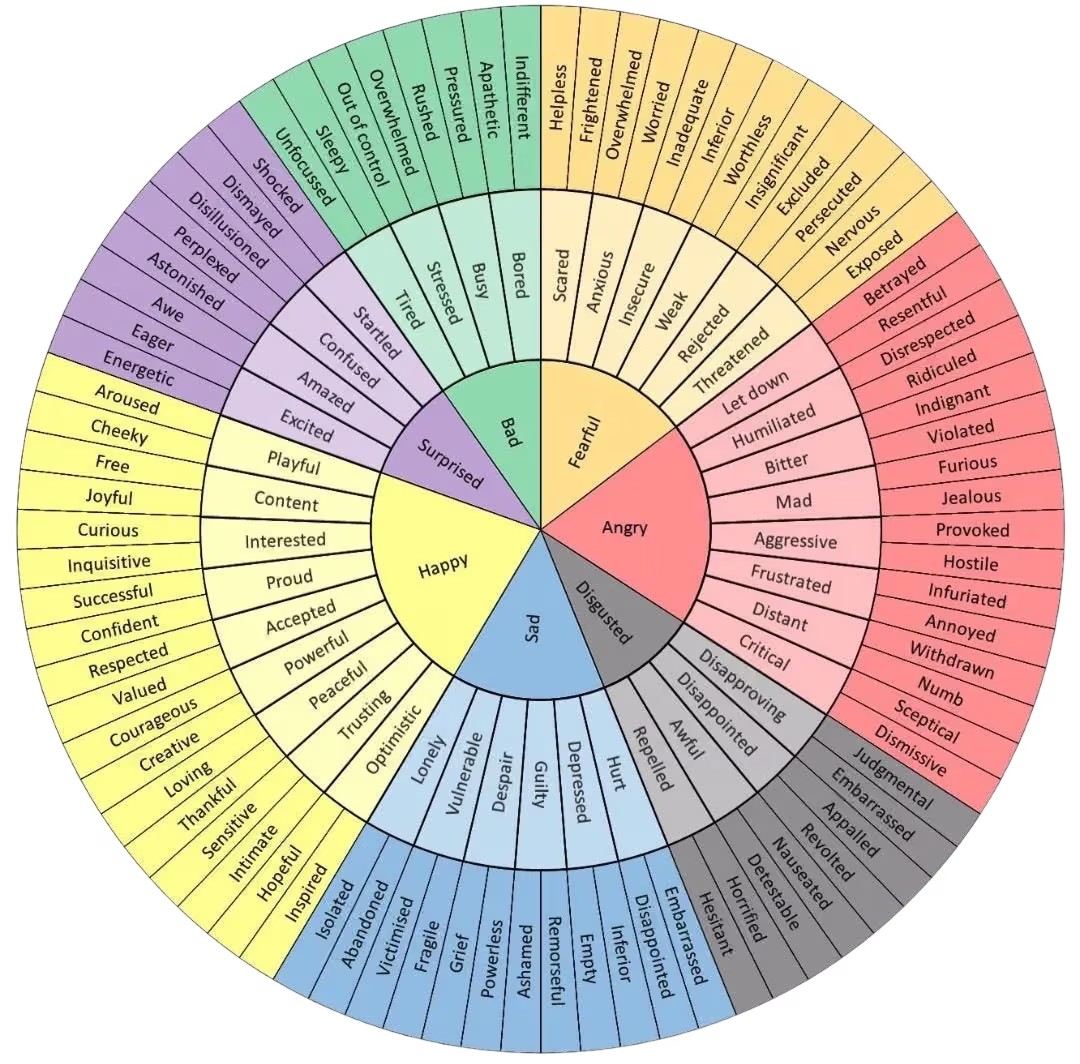
To combat this, we recommend using a feelings wheel. It's a visual tool that breaks down core emotions into specific nuances.
It helps you move from generic words like bad to specific drivers like powerless or ashamed. Using the correct emotional language makes your copy resonate on a much deeper level.
Conclusion
If you only solve the external problem, you're a commodity. If you solve the internal problem, you're a partner.
The data backs this up. Analyses by the IPA have shown that campaigns with purely emotional content perform nearly twice as well in terms of profitability compared to those with only rational content.
Take a look at your current website. Are you selling a lawnmower, or are you selling a sense of pride? By identifying the internal struggle your customers face, you can craft messaging that doesn't just inform them, but moves them.
Need help clarifying your message? It can be hard to see the label when you're inside the jar. If you want to uncover the internal problems driving your customers and translate that into high-converting copy, check out our StoryBrand Coaching programme today.

Receive the Mammoth Marketing Memos
Get weekly insights delivered straight to your inbox from New Zealand's StoryBrand experts
.avif)